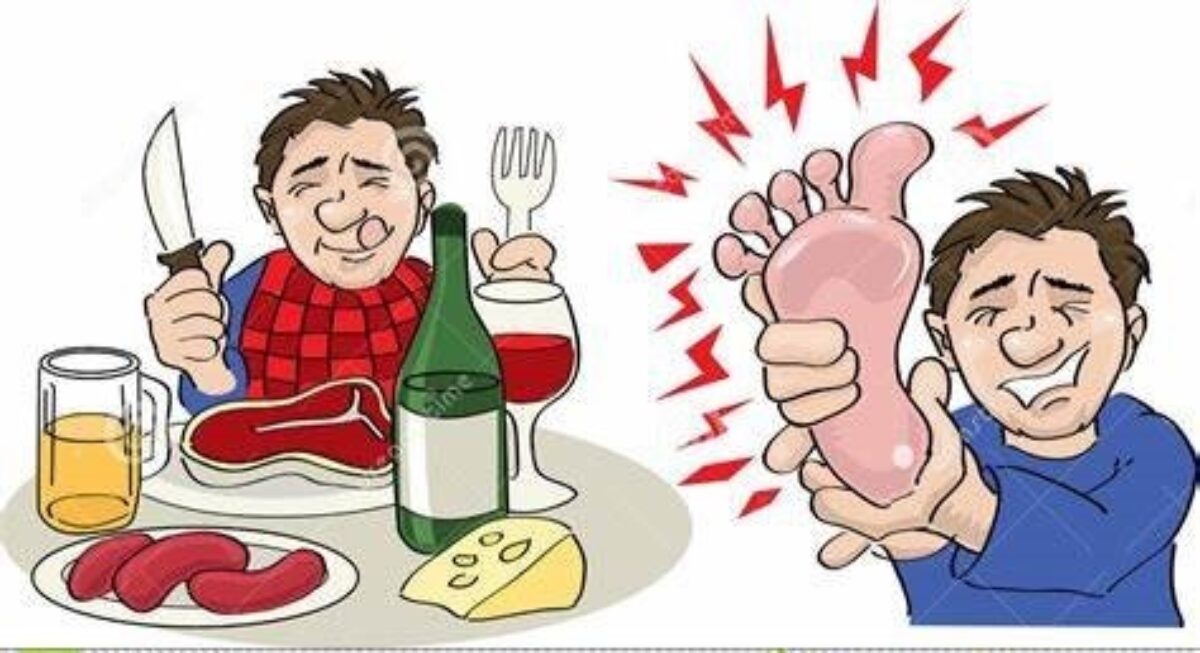
Gout isn’t the same for everyone. So why should the approach to managing it be?
For more than 25 years, Alternative Health Research has been helping people understand gout, uric acid, inflammation, and joint health from a different perspective.
Our journey began in 1998 with supplements created from firsthand experience with Gout and the frustration that often comes with trying to understand why attacks keep returning. Over the years, our focus has expanded beyond a single product or a single symptom. We have continued to learn from customers, research, nutrition, formulation, and—perhaps most importantly—the many different ways people experience gout and inflammation.
Today, our philosophy is simple:
One approach doesn’t fit all. The goal is to understand what your body needs and provide support where it matters most.
Gout Is More Than a Painful Joint
A gout attack can make it feel like the problem begins and ends in one toe, ankle, knee, or other joint.
But gout is much more complicated than that.
Uric acid is produced as part of normal metabolism. Problems can develop when uric acid accumulates and, under certain conditions, forms crystals in and around joints. Those crystals can trigger an intense inflammatory response—the familiar redness, swelling, heat, and pain associated with a gout attack.
And here’s something that is easy to overlook:
You can have an underlying uric-acid problem even when you aren’t experiencing an attack.
That is why we have never believed that simply addressing pain when it occurs tells the whole story.
A more complete approach considers the bigger picture:
- Uric acid metabolism
- Hydration and elimination
- Nutrition
- Digestive and gut health
- The body’s inflammatory response
- Joint structure and mobility
- Overall nutritional status
- Individual lifestyle and dietary factors
The objective isn’t to chase one symptom after another.
It’s to support the body from multiple angles while recognizing that different people may need different types of support.
Why a One-Size-Fits-All Approach Can Fall Short
Consider two people with gout.
One may primarily be concerned about recurring gout episodes and uric acid balance.
Another may have dealt with gout for years and now be more concerned about stiff, uncomfortable joints.
Someone else may experience broader inflammation or digestive issues alongside their joint concerns.
And another person may simply be looking for nutritional and lifestyle support after realizing that their overall health has a significant influence on how they feel.
These aren’t necessarily the same situation.
So recommending the exact same strategy to everyone doesn’t always make sense.
At Alternative Health Research, we’ve built our philosophy around different needs requiring different support.
That doesn’t mean taking everything at once.
It means understanding the role that different areas of health can play—and addressing the areas that are most relevant to the individual.
Start With the Foundation
Before thinking about specialized support, it makes sense to look at the foundation.
Nutrition matters.
The body requires vitamins, minerals, adequate hydration, and a balanced diet to carry out thousands of everyday processes. That’s one reason our philosophy has evolved beyond focusing exclusively on gout.
You can’t separate joint health completely from overall health.
This is also why our approach considers nutritional support as a foundation rather than treating it as an afterthought.
For some people, that may be the most important place to start.
For others, it may simply be one piece of a larger strategy.
Don’t Forget the Gut
The digestive system is another piece of the puzzle that is often overlooked.
Your gut is involved in digestion, nutrient absorption, immune function, and elimination. Our experience has led us to view digestive health as an important component of a comprehensive wellness strategy. Our own educational material has long incorporated gut support alongside uric-acid-focused support.
This doesn’t mean that probiotics or digestive support are a “cure” for gout.
It means that gut health deserves a place in the larger conversation about whole-body wellness.
That distinction matters.
Then Address the Individual Need
Once the foundation is considered, the approach becomes more individualized.
Is uric acid your primary concern?
Then the focus may be on supporting healthy uric acid metabolism and the body’s normal elimination processes.
Is inflammation your bigger concern?
Then broader nutritional and botanical support for a healthy inflammatory response may be more relevant.
Are your joints the biggest issue?
Then supporting joint structure, cartilage, flexibility, mobility, and connective tissue becomes another consideration.
Are several of these issues happening together?
That’s where a whole-body approach becomes particularly valuable.
The point isn’t that everyone needs every type of support.
The point is that you shouldn’t have to force your individual situation into someone else’s one-size-fits-all solution.
Our Experience Has Shaped This Approach
Alternative Health Research isn’t a company that appeared yesterday because gout became a popular topic online.
We began working in this area in 1998, when GC® GoutCare was our original product and our focus was much narrower. Since then, our experience has expanded into inflammation, digestive health, nutrition, and joint support.
Over those years, we’ve heard from people with very different experiences.
Some were dealing with their first gout episode.
Some had experienced attacks for years.
Some were primarily interested in uric acid.
Others were dealing with broader joint discomfort and inflammation.
And some were simply looking for a more comprehensive approach to their health.
That experience reinforced something we believe strongly:
There isn’t one magic answer for every person.
Good health decisions require context.
Why We Believe a Thoughtful Approach Is Better Than a “Magic Bullet”
There are plenty of products and websites promising instant solutions.
We don’t believe health works that way.
Our philosophy is based on several principles:
1. Address the Bigger Picture
Rather than focusing exclusively on pain, consider the systems and lifestyle factors that influence overall wellness.
2. Target Support to the Individual
Someone primarily concerned with uric acid may have different priorities than someone primarily concerned with joint mobility or broader inflammation.
3. Build From the Foundation
Nutrition, hydration, diet, digestive health, and lifestyle shouldn’t be ignored simply because a person is looking for a supplement.
4. Don’t Overpromise
Dietary supplements are not medications, and they shouldn’t be presented as cures for disease.
Our own website makes this distinction clear: our products are dietary supplements and are not intended to diagnose, treat, cure, or prevent disease.
5. Encourage Informed Decisions
We believe people should understand why they’re taking something rather than simply being told what to take.
That’s one reason we’ve spent so much time developing educational material around gout, uric acid, inflammation, diet, and joint health—not simply selling products.
More Than a Gout Product Company
After more than two decades, we’ve learned that people don’t really come to us because they want another bottle of capsules.
They come because they want answers.
They want to understand:
- Why does this keep happening?
- What is uric acid actually doing?
- Why do my joints still bother me between attacks?
- Does what I eat matter?
- What role does inflammation play?
- Does gut health matter?
- What can I do differently?
- And perhaps most importantly: Where do I start?
Those questions are the reason Alternative Health Research has continued to develop educational resources alongside our products.
Our goal has always been bigger than a single supplement.
It’s about helping people understand the connections between gout, uric acid, inflammation, nutrition, digestion, and joint health.
A Whole-Body Approach Doesn’t Mean Doing Everything
This may be the most important part of our philosophy.
Whole-body doesn’t mean “take everything.”
It means looking at the whole person before deciding what kind of support makes sense.
For one person, the foundation may be the priority.
For another, uric acid support may be the primary concern.
For someone else, inflammation or joint mobility may deserve more attention.
And for many people, several areas may overlap.
That’s why we think of our approach as a pathway rather than a prescription.
Start with the foundation.
Strengthen the basics.
Understand your individual needs.
Then add targeted support where appropriate.
One Approach Doesn’t Fit All. Your Health Is Personal.
After starting in 1998, we’ve had more than enough time to learn one thing:
People are different.
Their diets are different.
Their lifestyles are different.
Their health histories are different.
Their gout experiences are different.
And their goals are different.
So their approach should be allowed to be different, too.
At Alternative Health Research, we’re proud of the experience we’ve built over the years, but we’re even more interested in what that experience has taught us:
There is no single “magic bullet.”
There is a better way to think about gout and joint wellness—one that looks beyond the painful joint, considers the whole body, recognizes individual needs, and encourages informed choices.
That’s the philosophy behind our Whole-Body Approach to Gout & Joint Wellness.
Different needs. Different support. One complete picture of better health.
Learn More
We’ve been researching and educating about gout, uric acid, inflammation, nutrition, and joint health since 1998.